Santa Clara, CA – August 8, 2025
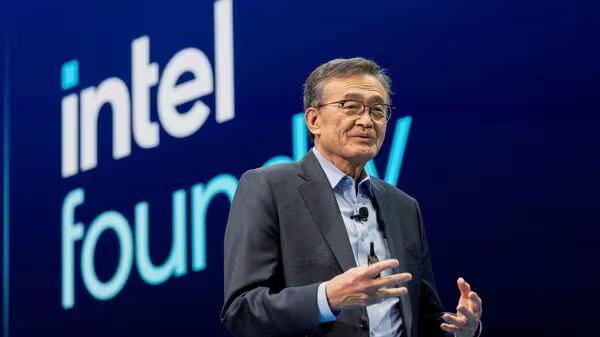
The leadership of Intel Corporation, a leading U.S. chip maker, is under scrutiny following a public demand from President Donald Trump for CEO Lip-Bu Tan to resign immediately. The call, made on Thursday via Truth Social, cites alleged conflicts of interest tied to Tan’s past investments in Chinese companies, sparking a wave of concern over national security and corporate integrity.
Tan, who assumed the role of CEO in March 2025, has faced questions from Arkansas Senator Tom Cotton regarding his extensive investments in over 600 Chinese firms, some linked to the Chinese military. Cotton’s letter to Intel’s board chair highlighted these ties, urging a review of Tan’s ability to oversee a company receiving significant U.S. government funding under the CHIPS Act. Reuters reported in April that Tan’s investments, totaling at least $200 million, include stakes in entities connected to China’s People’s Liberation Army.
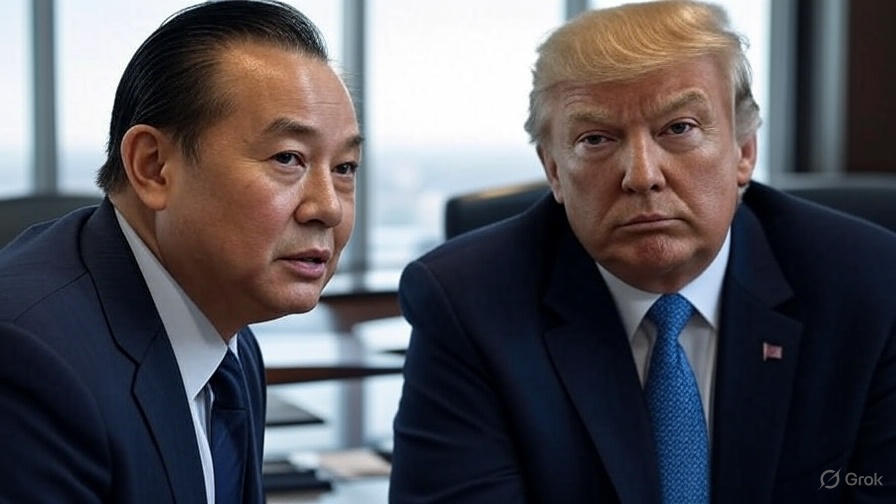
Trump’s statement, “The CEO of INTEL is highly CONFLICTED and must resign, immediately. There is no other solution to this problem,” has intensified pressure on Intel. The company responded with a statement affirming its commitment to U.S. national and economic security, aligning with the President’s America First agenda. However, the controversy has already impacted Intel’s stock, which dropped over 3% in premarket trading on Thursday.
Tan’s tenure at Intel follows his 12-year leadership at Cadence Design Systems, where the company recently pleaded guilty to violating U.S. export controls by selling technology to a Chinese military university. This backdrop has fueled the narrative of potential conflicts, though Intel has not commented further on Tan’s current status.
The situation unfolds as Intel navigates a challenging period, including workforce reductions and efforts to regain its footing in the AI chip market dominated by rivals like Nvidia. Analysts suggest that political pressure could complicate Intel’s strategic reset, with some investors viewing the uncertainty as a risk to its future.
This developing story continues to unfold, with implications for Intel’s role in America’s semiconductor industry and its relationship with federal initiatives.