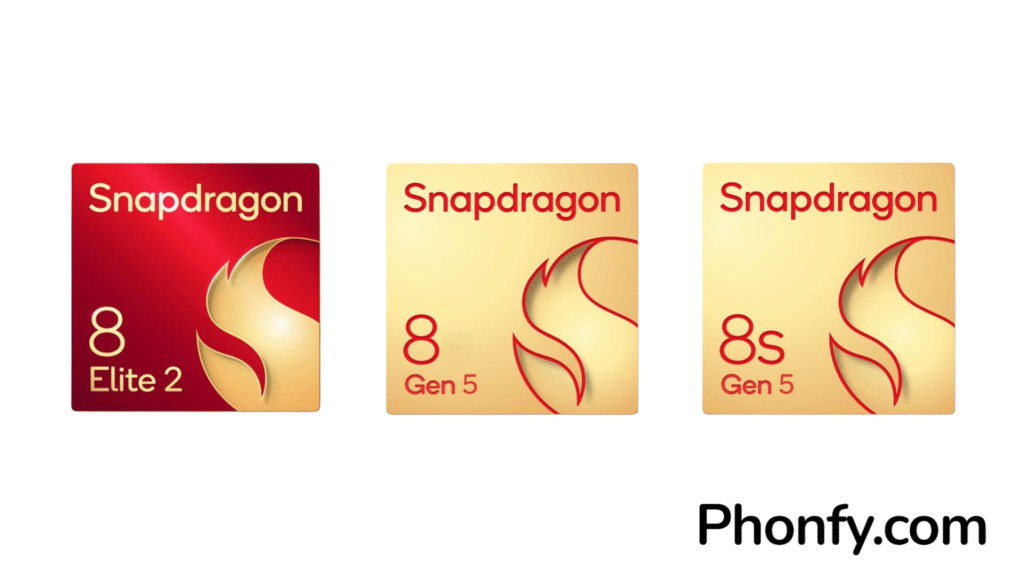
Qualcomm’s next-generation flagship mobile processor is rumored to be the Snapdragon 8 Gen 5. This chip is expected to be a high-end offering, but with a different focus and positioning than the company’s ultra-premium “Elite” lineup.
The Snapdragon 8 Gen 5 is anticipated to launch alongside the Snapdragon 8 Elite 2 at Qualcomm’s Snapdragon Summit in late September 2025. It’s rumored to be manufactured on a 3nm process and will likely power many of next year’s affordable flagship Android phones.
Key Rumored Features and Specifications
The Snapdragon 8 Gen 5 is a step up from the Snapdragon 8 Gen 4 (which was rebranded as the Snapdragon 8 Elite). Here’s what we know from leaks so far:
- Custom Oryon CPU Cores: The 8 Gen 5 is expected to feature Qualcomm’s in-house Oryon CPU cores, moving away from off-the-shelf ARM cores. This should result in significant performance and power efficiency improvements.
- Manufacturing Process: Rumors suggest the chip will be built on TSMC’s improved 3nm N3P process, which offers better efficiency than the 4nm process used for previous-generation chips.
- Performance: While expected to be a tier below the upcoming Snapdragon 8 Elite 2, the 8 Gen 5 is still tipped to offer performance on par with or slightly better than the previous-generation Snapdragon 8 Elite.
- AI and Connectivity: The chip will likely include enhancements to Qualcomm’s AI Engine, supporting on-device generative AI, and will be equipped with the latest connectivity, including Wi-Fi 7 and advanced 5G capabilities.
Naming Convention and Market Positioning
The naming of this chip is a bit confusing. Qualcomm rebranded the Snapdragon 8 Gen 4 as the Snapdragon 8 Elite last year. Now, with the rumored release of the Snapdragon 8 Gen 5 alongside a Snapdragon 8 Elite 2, it seems Qualcomm may be creating two distinct tiers for its flagship processors.
The Snapdragon 8 Elite 2 is expected to be the absolute top-of-the-line chip, likely for ultra-premium devices like the Samsung Galaxy S26 Ultra. In contrast, the Snapdragon 8 Gen 5 would serve as a powerful alternative for OEMs looking to create high-performance but more affordable flagship phones. This strategy could help Qualcomm dominate the premium Android market by providing a solution for every price point.