The Google Pixel 10 series is set to launch on August 20, 2025, with a full release expected by August 28, 2025. As Google’s flagship smartphone lineup for 2025, the Pixel 10 series promises advancements in AI, camera technology, and hardware efficiency. This post dives into the rumored specifications, features, design, and more, based on the latest leaks and reports.
Launch and Availability
Google has confirmed that the Pixel 10 series will be unveiled at its annual “Made by Google” event on August 20, 2025, in New York. The lineup is expected to include four models: Pixel 10, Pixel 10 Pro, Pixel 10 Pro XL, and Pixel 10 Pro Fold. Sales are likely to begin on August 28, 2025, aligning with Google’s typical release schedule. The event will also showcase other Google products like the Pixel Watch 4 and Pixel Buds.
Design and Display
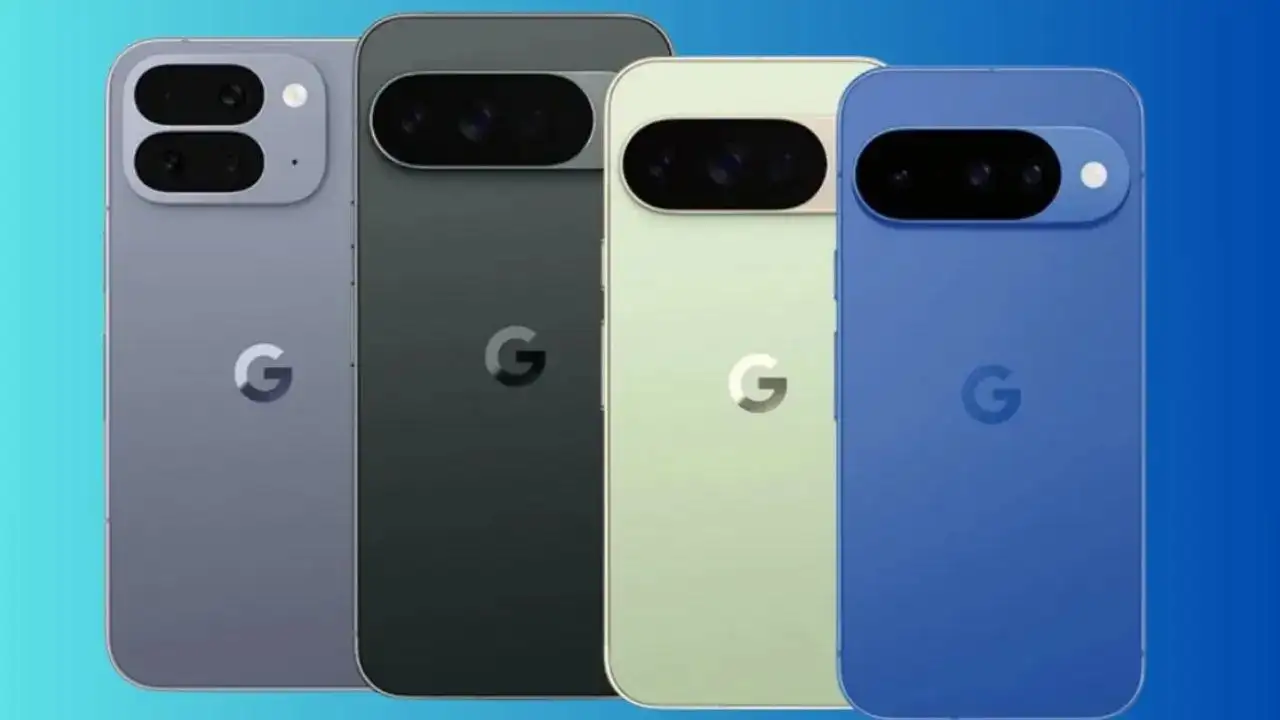
The Pixel 10 series retains the signature pill-shaped camera bar and flat-sided design introduced with the Pixel 9 series. Leaked renders suggest minimal design changes, with rounded corners, a punch-hole selfie camera, and a two-tone metallic finish on the camera bar. The Pixel 10 and Pixel 10 Pro are expected to feature a 6.3-inch FHD+ OLED display with a 120Hz refresh rate, while the Pixel 10 Pro XL will have a 6.8-inch QHD+ LTPO OLED display. The Pixel 10 Pro Fold will include an 8-inch main display when unfolded.
Display upgrades include improved brightness, with the Pixel 10 reaching 2,000 nits in high brightness mode (HBM) and 3,000 nits peak brightness, up from 1,800 nits and 2,700 nits on the Pixel 9. The screens will be protected by Corning Gorilla Glass Victus 2. A new adaptive tone feature, similar to Apple’s True Tone, will adjust the display’s color based on ambient lighting.
Available colors for the Pixel 10 include Obsidian (black), Indigo (purple), Lemongrass (yellow), and Frost (blue). The Pixel 10 Pro and Pro XL will come in Obsidian, Jade (green), Moonstone (gray), and Porcelain (white). The Pixel 10 Pro Fold may feature Sterling Gray, Limoncello, and Iris (purple).
Performance and Hardware
The Pixel 10 series will be powered by Google’s Tensor G5 chipset, manufactured by TSMC on a 3nm process, marking a shift from Samsung’s Exynos-based Tensor chips. The Tensor G5 is expected to offer a 15% boost in GPU performance and improved power efficiency, though it may not match the raw performance of competitors like the Snapdragon 8 Elite. The chip includes a custom image signal processor (ISP), a new Imagination Technologies DXT-48-1536 GPU with ray tracing support, and a modestly faster TPU for AI tasks (14% faster than the Tensor G4).
- Pixel 10: 12GB RAM, 128GB or 256GB storage.
- Pixel 10 Pro: 16GB RAM, up to 1TB storage.
- Pixel 10 Pro XL: 16GB RAM, 256GB to 1TB storage.
- Pixel 10 Pro Fold: Likely 12GB or 16GB RAM, up to 512GB storage.
A notable downgrade is the absence of WiFi 7, with the series sticking to WiFi 6E. Additionally, the Pixel 10 lacks a vapor chamber for cooling, which may impact thermal performance during intensive tasks.
The modem situation is unclear, with rumors suggesting either a MediaTek T900 or a Samsung Exynos 5400 modem. This shift could improve connectivity, but real-world performance remains to be seen, as past Exynos modems have faced criticism for network issues.
Camera System
The Pixel 10’s camera setup is a mixed bag. The base model gains a triple-camera system, a significant upgrade from the Pixel 9’s dual-camera setup, but with compromises:
- Pixel 10:
- Main: 48MP, 1/2.0-inch sensor (smaller than Pixel 9’s 1/1.31-inch).
- Ultrawide: 12MP (downgraded from 48MP on Pixel 9).
- Telephoto: 10.8MP, 5x optical zoom (new addition, borrowed from Pixel 9 Pro Fold).
- Selfie: 10.5MP.
- Pixel 10 Pro and Pro XL:
- Main: 50MP.
- Ultrawide: 48MP.
- Telephoto: 48MP, 5x optical zoom.
- Selfie: 42MP.
- Pixel 10 Pro Fold:
- Main: 50MP (up from 48MP on Pixel 9 Pro Fold).
- Ultrawide: 10.5MP.
- Telephoto: 10.8MP, 5x optical zoom.
- Selfie: Two 10MP cameras.

The addition of a telephoto lens on the base Pixel 10 is a welcome change, offering 5x optical zoom and up to 20x with Google’s Super Res Zoom. However, the downgraded main and ultrawide sensors on the base model may result in reduced low-light performance compared to the Pixel 9. The Pro models retain the same camera setup as their predecessors, while the Pixel 10 Pro Fold sees a slight main camera upgrade. Google’s computational photography and a new custom ISP are expected to mitigate some sensor limitations.
New AI-powered camera features include:
- Video Generative ML: Simplifies video editing by understanding content.
- Speak-to-Tweak: Allows voice commands for post-capture edits using large language models.
- Camera Coach: Uses Gemini AI to provide real-time photography tips for framing and lighting.
- Video Boost: May extend to the base Pixel 10 for enhanced video processing.
- Cinematic Blur: Supports 4K 30fps with new “video relight” options.
- Sketch-to-Image: A Galaxy AI-like feature for generating images from sketches.
- Magic Mirror: An unconfirmed AI feature, possibly related to photo editing.
Video recording capabilities are upgraded, with the Pixel 10 supporting 4K 60fps HDR, a step up from the Pixel 9’s 4K 30fps limit. Improved video stabilization, comparable to a DJI Osmo Mobile 6 gimbal, is also expected.
Battery and Charging
Battery capacities are slightly larger across the board:
- Pixel 10: 4,970mAh (up from 4,700mAh).
- Pixel 10 Pro: 4,870mAh.
- Pixel 10 Pro XL: 5,200mAh.
- Pixel 10 Pro Fold: 5,015mAh (up from 4,650mAh).
Charging speeds remain modest compared to competitors, with 29W wired and 15W wireless charging (using the Qi2 standard with magnets for Pixelsnap accessories). The inclusion of Qi2 magnets enables magnetic wireless charging, a first for Pixel phones in the U.S., enhancing accessory compatibility. However, at 29W, wired charging lags behind Chinese rivals offering 100W–150W.
Software and AI Features
The Pixel 10 series will ship with Android 16, featuring the Material 3 Expressive user interface, which emphasizes prominent key actions and grouped elements for a more intuitive experience. A desktop mode similar to Samsung’s DeX is also expected.
A standout feature is Pixel Sense (previously rumored as “Pixie” and briefly called “Magic Cue”), a next-generation AI assistant that runs fully on-device for enhanced privacy and offline functionality. Pixel Sense integrates contextual data from Google apps like Gmail, Calendar, Chrome, Keep, and screenshots to offer personalized assistance. It operates in the background, providing relevant shortcuts and information based on screen content.
Other AI enhancements include support for on-device Stable Diffusion models for faster image generation and on-device training capabilities via the Tensor G5’s TPU. The Pixel 10 series will also offer seven years of software updates, ensuring support until 2032.
Connectivity and Other Features
- Satellite Connectivity: All main Pixel 10 models will support satellite communication, a first for the series.
- IP68 Rating: Dust and water resistance across all models, with the Pixel 10 Pro Fold potentially being the first foldable with full IP68 waterproofing.
- UWB (Ultra-Wideband): Available on Pro and Pro XL models for precise location tracking.
- Thread Support: For smart home connectivity.
- WiFi 6E: No WiFi 7 support, a step back from the Pixel 9.

Pricing
Pricing is expected to remain largely consistent with the Pixel 9 series, though tariffs could impact final costs:
- Pixel 10: $799 (128GB), $899 (256GB).
- Pixel 10 Pro: $999 (128GB), up to $1,449 (1TB).
- Pixel 10 Pro XL: $1,199 (256GB), up to $1,499 (1TB).
- Pixel 10 Pro Fold: $1,600 (down from $1,800 for the Pixel 9 Pro Fold).
These prices reflect stable or slightly reduced costs compared to predecessors, with the Pixel 10 Pro Fold seeing a $200 price drop.
Pros and Cons
Pros:
- Triple-camera system on the base Pixel 10 with 5x telephoto.
- Tensor G5 with improved efficiency and AI capabilities.
- Brighter displays with adaptive tone technology.
- Qi2 magnetic wireless charging and Pixelsnap accessories.
- Seven years of software updates with Android 16 and Pixel Sense AI.
- Satellite connectivity and IP68 rating.
Cons:
- Downgraded main and ultrawide camera sensors on the base Pixel 10.
- No WiFi 7 or vapor chamber cooling.
- Modest charging speeds compared to competitors.
- Uncertain modem performance (MediaTek T900 or Exynos 5400).
Conclusion
The Google Pixel 10 series builds on the Pixel 9’s strengths with a focus on AI-driven features, a refined Tensor G5 chipset, and incremental hardware upgrades. The addition of a telephoto lens to the base model and Qi2 support are notable improvements, but camera sensor downgrades and the lack of WiFi 7 or faster charging may disappoint some users. With a strong emphasis on software innovation, including Pixel Sense and Android 16, the Pixel 10 series aims to compete with rivals like the Samsung Galaxy S25 and iPhone 17, particularly in AI and photography. The official launch on August 20, 2025, will reveal whether Google can deliver a compelling flagship experience.
For more details, check out trusted sources like Android Authority, TechRadar, and The Verge for ongoing updates as the launch approaches.